
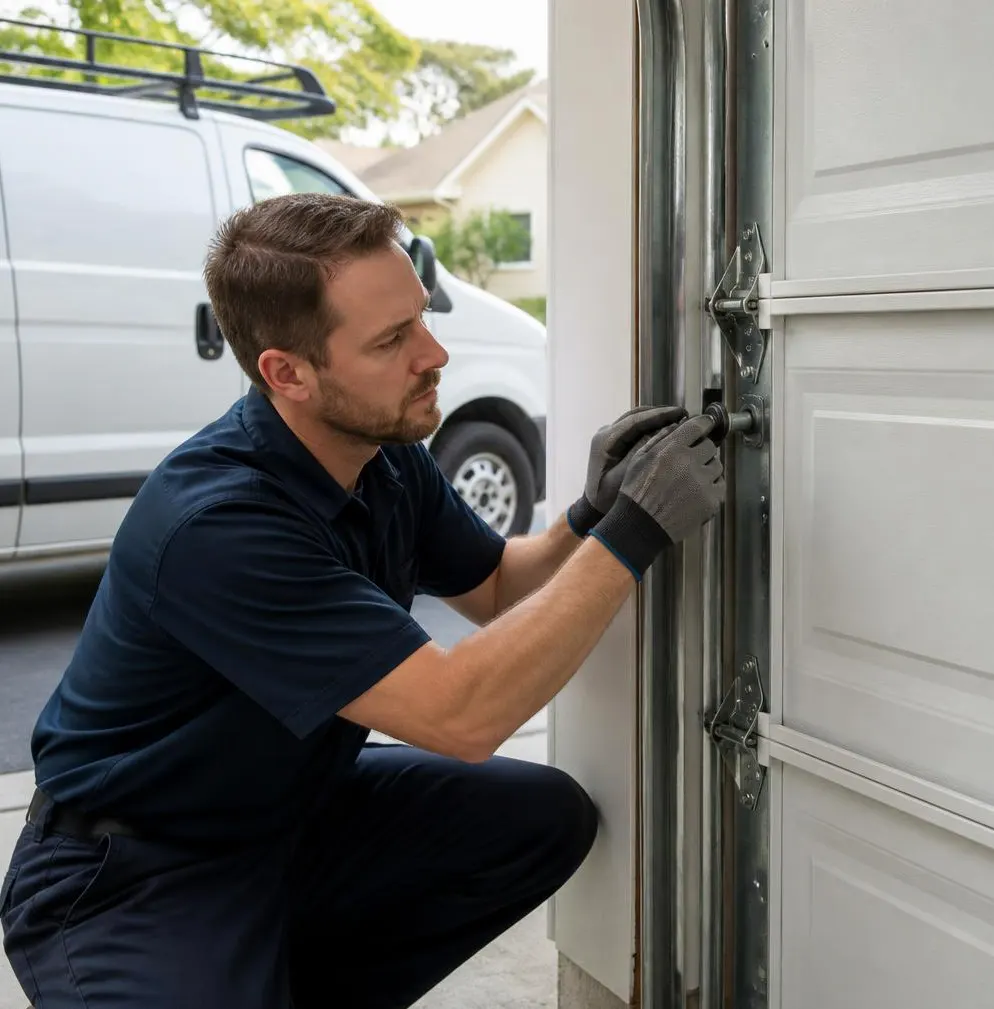
The first cold snap of the year hits, you press the opener button, and nothing happens — or the door grinds up six inches and stops. The instinctive move is to keep mashing the button, figuring the motor just needs a harder push to break free. It's tempting because it feels like the fastest fix, but repeatedly forcing an opener against resistance is how you burn out a motor, strip a drive gear, or snap a cable that was already stiff and brittle in the cold. The second most common mistake is dumping a kettle of hot water on a seal that's frozen to the concrete. It works for about ninety seconds, then that water refreezes into a thin sheet of ice that's worse than what you started with, and it can warp the rubber seal permanently.
What a Cold-Weather Stuck Door Actually Looks Like
Before you troubleshoot anything, it helps to know which symptom you're dealing with, because they point to different fixes:
- The door won't move at all, and the opener motor hums or the wall button light blinks without the door lifting.
- You can see a visible frost or ice line where the rubber seal meets the concrete apron.
- The door opens a few inches, then the opener reverses it, as if something's blocking it.
- There's a grinding or scraping noise from the rollers or tracks on the first real cold morning.
- If you lift it manually, it feels noticeably heavier than it did last week.
Almost all of these show up for the first time on the first hard-freeze morning after a wet night — which is exactly the pattern Cypress sees when a cold front rolls in behind a storm.
Working Through the Causes, in the Order a Technician Would Check Them
1. An ice bond at the bottom seal
This is the first thing checked because it's the most visible. The rubber weatherstripping along the bottom of the door sits on a wet concrete apron overnight, the temperature drops, and the water between the seal and the slab freezes into a thin bond. The fix is to break that bond gently — a plastic scraper or a small amount of warm (not boiling) water run along just the seal, not the whole door — then dry the area and work the door up by hand a few inches at a time before you ever touch the opener. Chipping at it with a metal tool will tear the seal or gouge the concrete.
2. Weatherstripping that's gone stiff
Vinyl and rubber lose flexibility in cold temperatures and can stick to the track or threshold even without ice. If the seal is cracked, flattened, or pulling away from the door at the edges, it's past due for replacement — a routine, inexpensive maintenance item that prevents the ice-bond problem above from recurring every cold morning.
3. Springs that have lost tension
Metal contracts slightly in cold weather, and a spring that was properly calibrated during a hot Texas summer can feel noticeably off once temperatures drop. If the door feels heavy to lift by hand, or the opener strains and stalls partway, tension is the next thing a technician checks. Sometimes it just needs re-adjusting; if the spring already shows rust or corrosion from months of humidity, the cold snap is often what finally pushes a tired spring past its limit, and replacement is the real fix.
4. Thickened or dirty lubricant in the tracks and rollers
Dust and wind are a fact of life here, and grease on tracks and rollers collects grit over a long summer. That same old lubricant stiffens and gums up in cold temperatures, creating drag that a technician will feel as soon as they run the door manually. The fix is to clean off the old grease and dust, then reapply a light, silicone-based lubricant rated for temperature swings — not a general-purpose spray lubricant, which breaks down too fast.
5. Opener force settings reacting to the extra resistance
Modern openers have safety sensors that reverse the door if they detect unexpected resistance. A stiff seal or gummed-up rollers can trip that sensor, making the opener think something's in the way. Once the mechanical drag is actually fixed, a technician rechecks the force and limit settings rather than just cranking the force higher as a workaround — turning up force to push through resistance defeats the safety feature it's there for.
6. Track alignment and hardware loosened by contraction
Metal panels and tracks contract slightly in cold weather, which can turn a small, pre-existing misalignment — from years of wind and storm-driven rattling — into a door that binds only when it's cold. This is usually the last thing checked, and the fix is straightforward realignment and tightening of track hardware.
Why This Shows Up More Here Than You'd Expect
Cypress doesn't deal with deep freezes often, but the combination of long, humid summers, sudden storms, and the occasional sharp cold front is exactly the recipe for a door that sticks: moisture gets into the seal, dust and wind grime build up in the tracks all year, and then one overnight freeze turns all of that into a door that won't move. It's less about how cold it gets and more about how fast the temperature drops after a wet day.
When to Call Cypress Garage Door
If you've broken the ice bond and the door still feels heavy, grinds, or the opener keeps reversing, stop operating it and call. Forcing a door with a failing spring or a misaligned track risks a cable snapping or a panel coming off its track, and that's a bigger repair than the original problem. Cypress Garage Door can run a full Garage Door Maintenance check — cleaning and re-lubricating tracks, inspecting seals, and verifying spring tension — before the next cold front comes through, or handle a Spring Replacement if the freeze revealed a spring that was already near the end of its life.
If your garage door is sticking, grinding, or refusing to open on cold Cypress, TX mornings, call Cypress Garage Door for a fast, fair-priced inspection before the next front rolls in.