
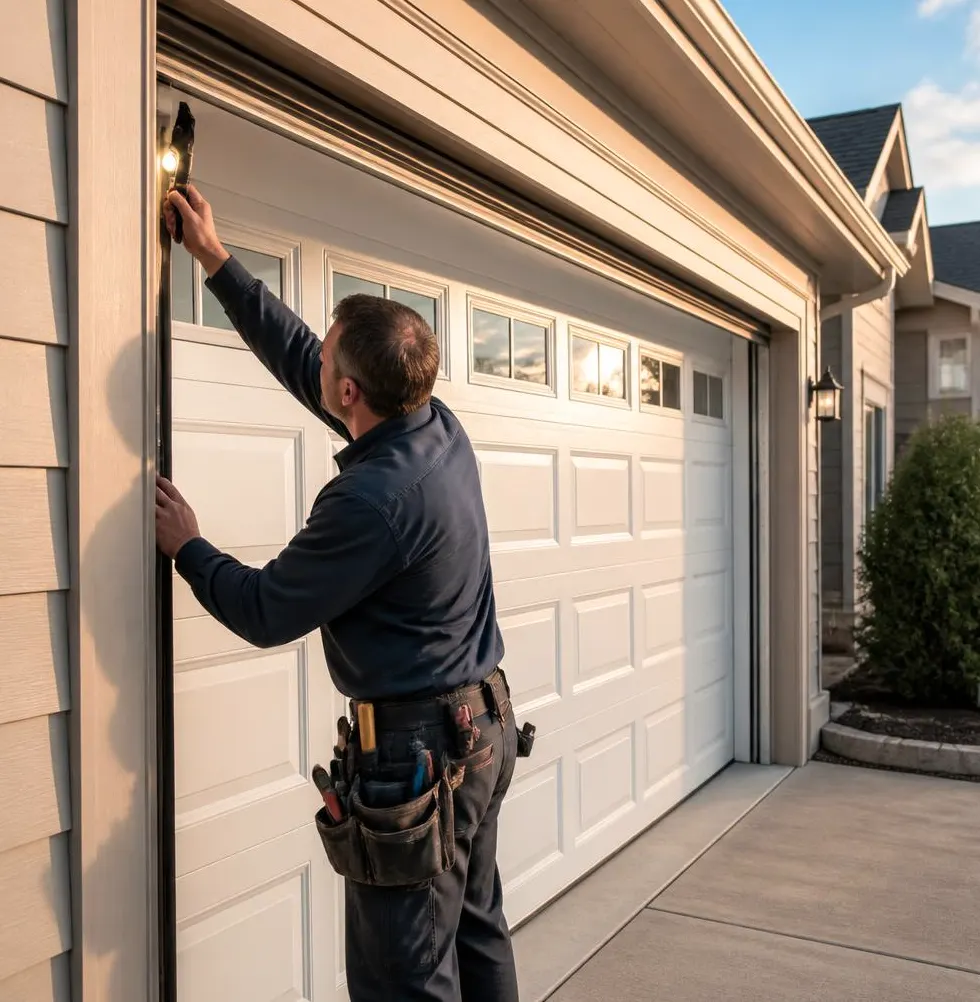
Rule of thumb: only pull the emergency release cord when the door is fully closed. The exceptions are rare, and they almost all involve a door that's already open, a spring that's already failed, or a track that's already bent — situations where the cord stops being a convenience and starts being a liability.
What the Cord Actually Does
That red-handled rope hanging from the trolley on your opener's rail has one job: it disconnects the door from the opener's carriage. Once disconnected, the door is no longer attached to the motor at all — it moves purely on its springs and your own muscle. This is exactly what you want during a power outage, when the opener is dead weight and you need to get the car out by hand.
What people forget is that the opener was never what held the door up in the first place. The springs do that job, every day, whether the opener is plugged in or not. The cord just lets you bypass the motor. It doesn't change the physics of a 130- to 400-pound door hanging over your head.
The Real Danger: What Goes Wrong and How Badly
If the springs are healthy and the door is closed, pulling the cord is harmless — you disconnect, lift the door by hand, and it moves smoothly because the springs are doing their job. The trouble starts when the springs are compromised and the door is already up.
A garage door held open relies on spring tension working through the opener's carriage. Disconnect that link with the door raised and there's nothing left holding the weight — it can drop suddenly, sometimes falling several feet before hitting the floor or whatever's underneath it: a hand, a pet, a bumper, a foot. Beyond the injury risk, a sudden drop can bend tracks, snap cables, crack panels, or tear the bottom bracket loose, turning a $0 fix into a full repair.
A second, quieter failure mode shows up after wind or hail events. If a track has been knocked out of alignment, disconnecting the opener and trying to move the door by hand can let it jump the track entirely, which usually means the door comes off its rollers on one side and binds at an angle — much harder (and more dangerous) to deal with than a door that simply won't open.
When Pulling the Cord Is the Right Call
- Power is out and the door is closed. This is the classic case after a storm knocks the electricity out and you need the car. Pull the cord, lift the door manually — it should move smoothly and hold position partway up if the springs are in good shape — then prop it open, back out, pull it closed by hand, and reconnect the trolley once power is back by guiding the arm back into the carriage and running the opener through one short cycle.
- The opener has failed but the door itself is fine. If you hear the motor humming but the door isn't moving, or the opener has simply died, disconnecting lets you operate the door manually until a technician can look at the opener.
When Pulling the Cord Makes Things Worse
- The door is already open and won't come down on its own. If the opener is struggling and the door is up, don't disconnect it hoping gravity will help — unassisted, an unbalanced door can free-fall.
- You suspect a broken spring. Signs include a door that feels unusually heavy, closes crooked, or makes a loud bang right before it stops working. Disconnecting a door in this state, open or closed, removes the one thing still partially supporting it.
- A track looks bent or debris is jammed in the rail. After high wind or hail has rattled things around, inspect before you operate by hand. Forcing a door past an obstruction with the opener disconnected is how doors come off their rollers.
- The door is mid-cycle. Never pull the cord while the door is actively moving — wait until it's fully stopped.
A Quick Way to Check Your Balance
With the door fully closed, unplug the opener and pull the release cord. Lift the door by hand to about waist height and let go. A properly balanced door will stay exactly where you left it. If it slides back down or shoots upward on its own, the springs are out of balance — reconnect the opener carefully, avoid using the manual release again until it's inspected, and don't leave the door open unattended in the meantime.
This is worth checking once a year, and especially after the kind of summer heat swings and spring-stressing temperature cycles that are routine for this area — metal springs lose and gain tension as they heat and cool, and a door that was balanced in spring can be noticeably off by fall.
When to Call Cypress Garage Door
If your balance check comes back off, if a spring looks stretched or has a visible gap in its coils, or if the door dropped suddenly after you used the release cord, stop operating it by hand and call us. We handle spring replacement as a same-system job — both springs, properly matched and tensioned, not a single patch — and we offer garage door maintenance visits that catch worn cables, misaligned tracks, and failing rollers before they turn into an emergency-release situation in the first place.
If you're in Cypress, Houston, Tomball, Katy, Spring, Jersey Village, Fairfield, or Hockley and your door isn't behaving the way it should, give Cypress Garage Door a call — we'll get it diagnosed and fixed right.